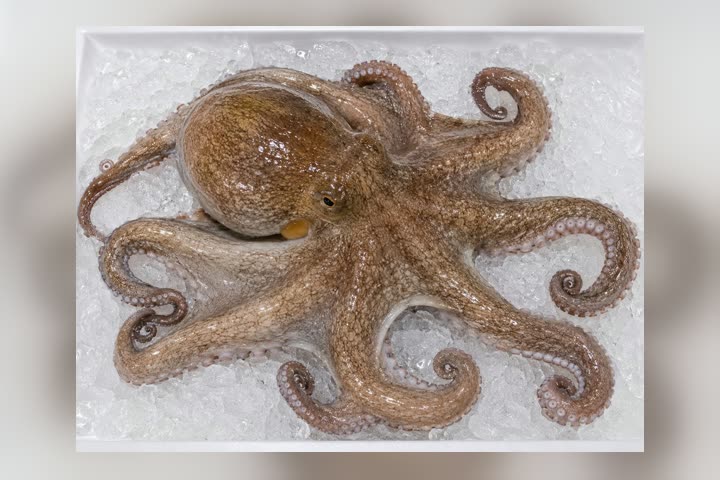
Madako (Common Octopus) is the most widely consumed octopus in Japanese cuisine — from casual takoyaki street food to premium sushi bars, from home-cooked simmered dishes to elegant kaiseki presentations. The finest Japanese Madako comes from Akashi (Hyogo) and the Seto Inland Sea, where the strong tidal currents produce octopus with extraordinarily firm, well-developed muscle and clean flavor.
Preparation is an art — raw octopus must be tenderized (traditionally beaten against rocks, now often massaged with salt), then briefly boiled with care not to over-cook. Perfectly prepared Madako has a satisfying, slightly springy texture and clean, sweet ocean flavor. Over-cooked, it becomes rubbery and disappointing; the skill required is a mark of a real Japanese chef.
Advance Intertrade sources both live and boiled Madako from Akashi, Nagasaki, and other Seto Inland Sea ports. The boiled (boiru-tako) form is convenient for restaurants that want to skip the tenderizing/boiling step while maintaining premium quality.
 Wild
Wild